


“FRIDAY RE-VERSO”
“At the point where I am, I can neither be what I always am nor transform myself into what I could be.”
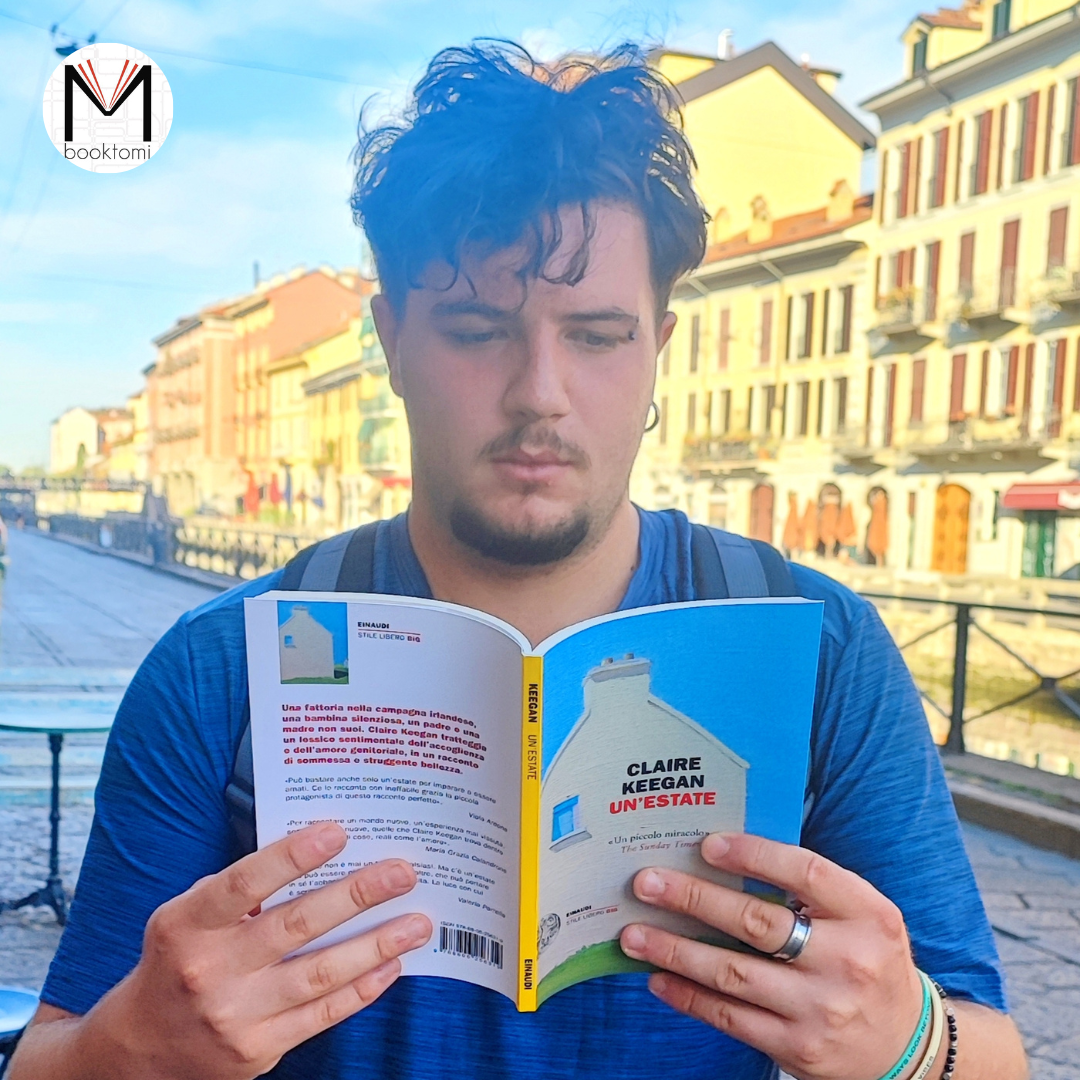
A summer is an indefinable time—expanded yet dense, charged with meaning yet fleeting, it ends just as you think you’re beginning to understand it. Claire Keegan has inhabited this time with an elegance, clarity, and precision that border on perfection. Perhaps it’s the short form that conveys this impression; as we know, in a longer novel, even slips have the opportunity to get back on track, without ruining our journey too much. But in 70 pages, you can’t recover, and so, in fact, you can’t make a mistake. And Keegan doesn’t get a word wrong.
The Redmonds’ little daughter is handed over to the Kinsellas: her mother is pregnant again and needs some peace and quiet. The brief and spare handover ceremony that opens the book is enough to convey the distance between the two families. In the time she’s given to spend with Edna and John, the little girl will learn that she’s not a nuisance or a burden, but a person, and as such, worthy of love. Some people take a lifetime to understand this—to understand that it’s all a matter of perspective.
Without delving too deeply into psychological considerations that aren’t our concern, many will know that in the first months of life, our sense of security is built thanks to and through the gaze of those closest to us (usually our mother). We are defenseless, helpless: care and protection in that moment are fundamental to our future functioning. If this loving gaze is missing or distorted, one of the most common reactions is to not perceive ourselves as worthy of that gaze that was denied us. Never. Because it’s truly difficult to contradict this first and seemingly definitive lesson.
The little protagonist, as a child, doesn’t have the tools to verbalize all the disaffection that surrounded her and raised her, and it is precisely because of this that “A Summer” doesn’t become a psychological treatise but rather simply stages the premises, consequences, and alternatives of this missed gaze. Feeling loved begins, above all, with being seen: in our mistakes, in our anger, in our desire to do well or to escape, in our search for validation. The moral value of our actions is a whole subsequent step. The Kinsellas adopt the child, but they don’t simply keep her at home: through minimal conversations and ordinary gestures, they restore her right to exist, imperfectly and, therefore, humanly. Furthermore, they don’t burden her with the pain of what they’ve lost—neither in the form of resentment nor in the form of expectation. They see and love, with difficulty and within their very human limitations.
“I still can’t find the words, but this is a new place; we need new words.” New isn’t necessarily beautiful, or better: new is a possibility. Within this alternative space, we can walk, make mistakes, ask questions. We can build ourselves, revise the narrative we have of ourselves, allow ourselves to live within a hypothesis of love without running away. If you read this novel, and we recommend it, you will understand how Claire Keegan is giving you not only new words to describe yourself, different gestures to navigate the world, but also, and above all, a gaze capable of containing all your mistakes.
Written by Delis
____________________________________________________________________________________________________
Claire Keegan, Un’estate, Einaudi, Torino, 2023
Original edition: Foster, 2010