
HomeTag milano

https://www.booktomi.com/wp-content/uploads/2026/11/Copia-di-Copia-di-Copia-di-Copia-di-Copia-di-libro-valerio-24-640x640.png

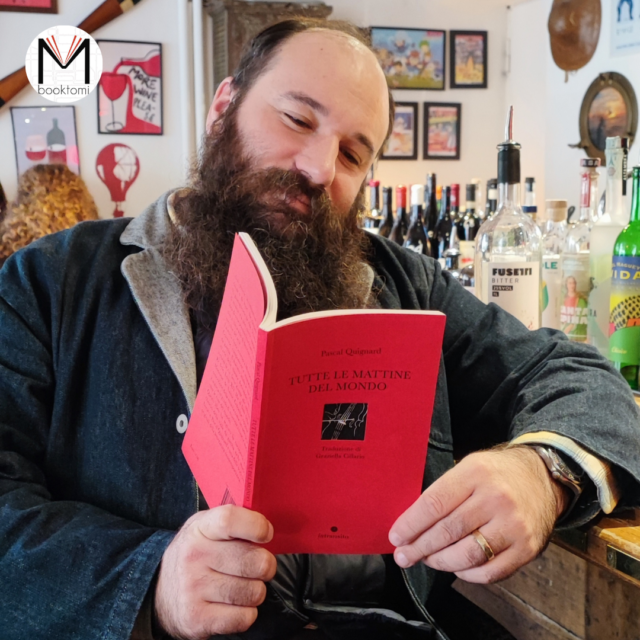
All the World’s Mornings

“FRIDAY RE-VERSO” “Do you have a heart to feel? Do you have a brain to think?   1650. Monsieur de Sainte-Colombe, a musician and composer, is left a widower with two daughters, Madeleine and Toinette. He retreats to a small house by the river—a place seemingly outside of time—where he instructs his children in music, spurning every invitation to leave his “court of willows,” even declining an invitation from the King. Especially the invitation from the...
https://www.booktomi.com/wp-content/uploads/2026/10/Copia-di-Copia-di-Copia-di-Copia-di-Copia-di-libro-valerio-23-640x640.png

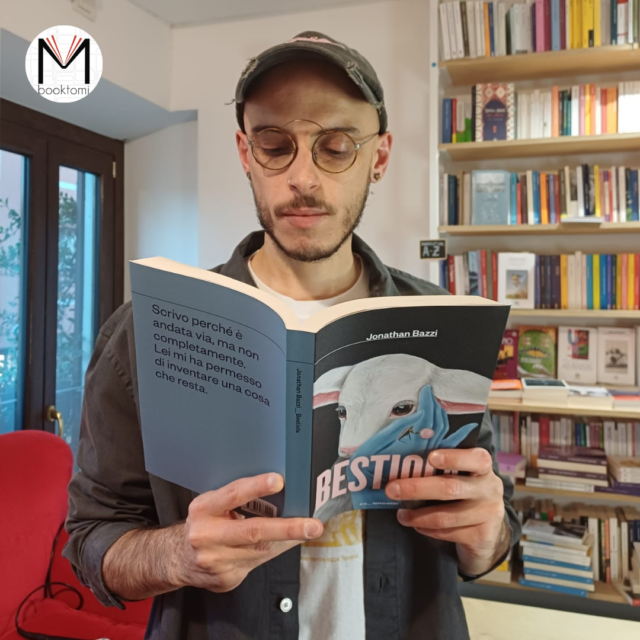
Little creature

“I admit there is something inadequate in me, miss you: I am not capable of living.” With this third book, Bazzi offers us a precious gift: a perspective capable of looking beyond the surface of things, of finding cracks where others see only walls, and of discerning poetry even in the most disheveled folds of existence. He is one of the few contemporary writers with the ability to bridge the gap between heart and mind....

https://www.booktomi.com/wp-content/uploads/2026/10/Copia-di-Copia-di-Copia-di-Copia-di-Copia-di-libro-valerio-22-640x640.png

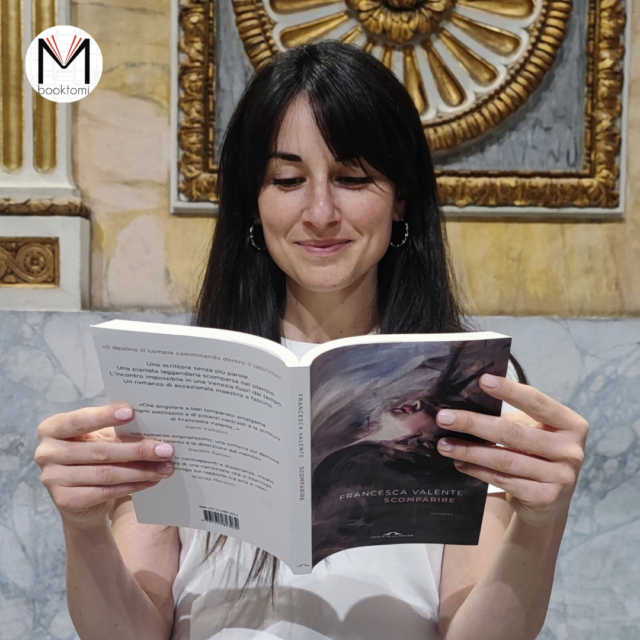
Disappear

“FRIDAY RE-VERSO” “Being unreasonable, acting contrary to what is required, is the attitude of someone who considers other possibilities.”   We have learned, through much reading, that the books that teach us the most are those that demand a great deal from us. They ask us to go along with them, to delve deeper; sometimes they require time to sink in, or a second reading; they ask for time, concentration, and even a sense of surrender—an...

https://www.booktomi.com/wp-content/uploads/2026/08/Copia-di-Copia-di-Copia-di-Copia-di-Copia-di-libro-valerio-21-640x640.png

Fire in the Blood

“They only think about living in peace; they have everything they need to be happy: work and youth.” Reading a book by Irène Némirovsky means taking care of yourself, loving yourself. For every topic she addresses, she is capable of capturing hidden nuances, shamefully suppressed perspectives, and the most appropriate words. Whether we find ourselves in a wealthy, bourgeois family in the city or at a provincial landowner’s court, Némirovsky is capable of penetrating to...

https://www.booktomi.com/wp-content/uploads/2026/08/Copia-di-Copia-di-Copia-di-Copia-di-Copia-di-libro-valerio-20-640x640.png

The white book

“Lying on her side with her dead daughter on her chest, she felt her daughter slowly cooling. Then she had no more tears.” It’s a white book, with a sincere and far from banal title; skimming the table of contents, you’ll find yourself thinking: snow, fog, and so on. You’re probably thinking of a simple book, imbued with the purity to which Korean literature, and specifically Han Kang’s, has become somewhat accustomed. We’re faced with...

https://www.booktomi.com/wp-content/uploads/2026/08/Copia-di-Copia-di-Copia-di-Copia-di-Copia-di-libro-valerio-19-640x640.png

Prague, disappearing poetry

“The comic is more cruel: it brutally reveals to us the insignificance of everything.” Born from the union of two short texts published in the 1980s in Le Débat, the book offers an even more intimate insight into Kundera. In both the first essay (Prague, Disappearing Poetry) and the second (Eighty-Nine Words), one gets the impression of a champion of beauty, memory, truth, and a firm resolve to avoid compromise. With the Force of Reason,...

https://www.booktomi.com/wp-content/uploads/2026/07/Copia-di-Copia-di-Copia-di-Copia-di-Copia-di-libro-valerio-18-640x640.png

Viviane Élisabeth Fauville

“She is so surprised to see her mother leaning over her that she forgets to cry.” We are certainly witnessing a narrative experiment. A successful idea, but one that we weren’t ready for at the beginning of the novel, and in fact, we read the first five pages twice. Written almost entirely in the second person singular, the book immediately conveys a sense of alienation, as if the narrator wanted to simultaneously care for the...

https://www.booktomi.com/wp-content/uploads/2026/06/Copia-di-Copia-di-Copia-di-Copia-di-libro-valerio-22-640x640.png

Against the empires

“Violating the conventions and beliefs of his world proved neither an ethically sound nor a politically astute choice.” Understanding the constantly and rapidly changing world of international relations means relying on the knowledge and quality of scholars and intellectuals who can help develop lateral thinking about the implications of a given event and connect them. Since the early 2020s (although some specify since the early 2010s), the liberal international order seems to have reached its...

https://www.booktomi.com/wp-content/uploads/2026/06/Copia-di-Copia-di-Copia-di-Copia-di-libro-valerio-20-640x640.png

Extinction

“As soon as I saw Alisia get off the train I thought with relief that we had reached the point: she was finally leaving me.“ Silvio and Alisia are a non-couple. They have almost nothing in common, yet their relationship continues like a stone thrown into a lake, which continues to sink until it reaches the bottom. As a couple, however, they work because, as the author writes, the most successful couples are those who...

https://www.booktomi.com/wp-content/uploads/2026/06/Copia-di-Copia-di-Copia-di-Copia-di-libro-valerio-19-640x640.png

Morgana the Fairy

“FRIDAY RE-VERSO” “Expecting mirages to take us where we want to go is madness.”   Morgana is the deceptive fairy who distorts reality through strange visions, making hallucinations something we must necessarily confront. The treatise on imaginary ethnography that Celati presents us does more or less the same thing: it forces us to immerse ourselves in the lives of a nonexistent people, describing their habits, stories, and characteristics, mocking a certain colonial descriptivism and leaving...