


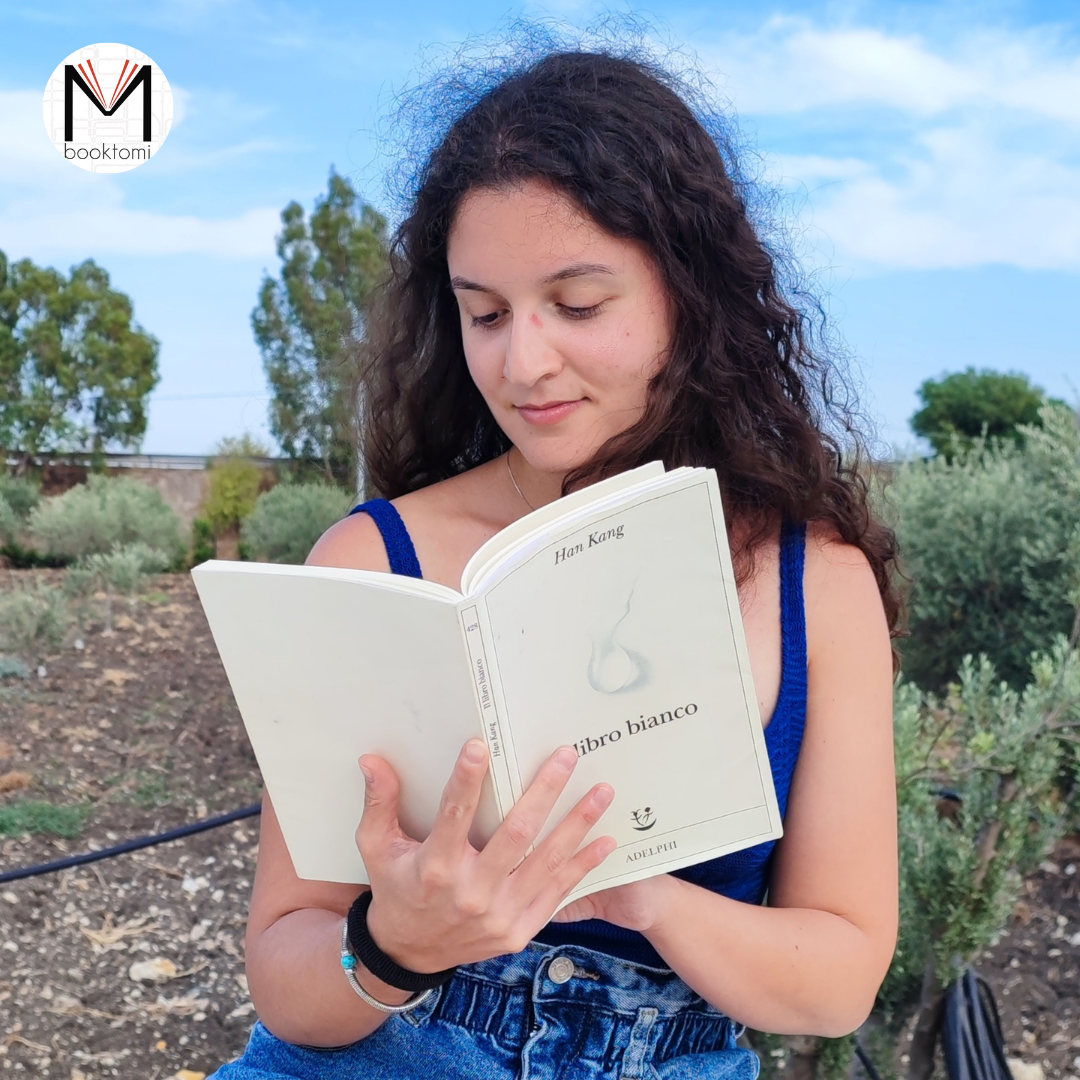
“Lying on her side with her dead daughter on her chest, she felt her daughter slowly cooling. Then she had no more tears.”
It’s a white book, with a sincere and far from banal title; skimming the table of contents, you’ll find yourself thinking: snow, fog, and so on. You’re probably thinking of a simple book, imbued with the purity to which Korean literature, and specifically Han Kang’s, has become somewhat accustomed. We’re faced with a superior level of writing, but the text isn’t a mountain, but rather a high-altitude lake, mirrored in its reflection, and those who arrive can’t help but contemplate it.
As we were saying: it’s a white book. It’s white in form, that is, in the white spaces between pages; it’s white in content and meaning. Because, to delve deeply into the meaning of the word “white,” you need to think not only of the color, but of the very meaning this term has in the writer’s language. In Korean, in fact, there are two terms: hayan, which describes pure white, and huin, which evokes an intertwining of life and death.
And so it is that all pure things are white, but also all things that carry within them an intrinsic sense of death and rebirth. White is the city where the writer is staying for a literary residency and where the book is born; white is the book’s protagonist, who is not simply and banally the writer herself, but hides within herself an additional figure: an older sister who died a few hours after her birth, whose presence is a constant throughout the story and in the author’s life. Absences that have created presences.
We have decided not to reveal the city around which the entire story revolves, but, by chance, we had the opportunity to experience it for a year, and this text is perhaps one of those that best captures it. If you happen to visit it, don’t be misled by the recent lights and renovations that have made it similar to many other European cities; instead, go and find the white within the buildings, the streets, and the people.
_____________________________________________________________________________________________________
Han Kang, Il libro bianco, Adelphi, Milano, 2025
Original edition: 흰, 2016