


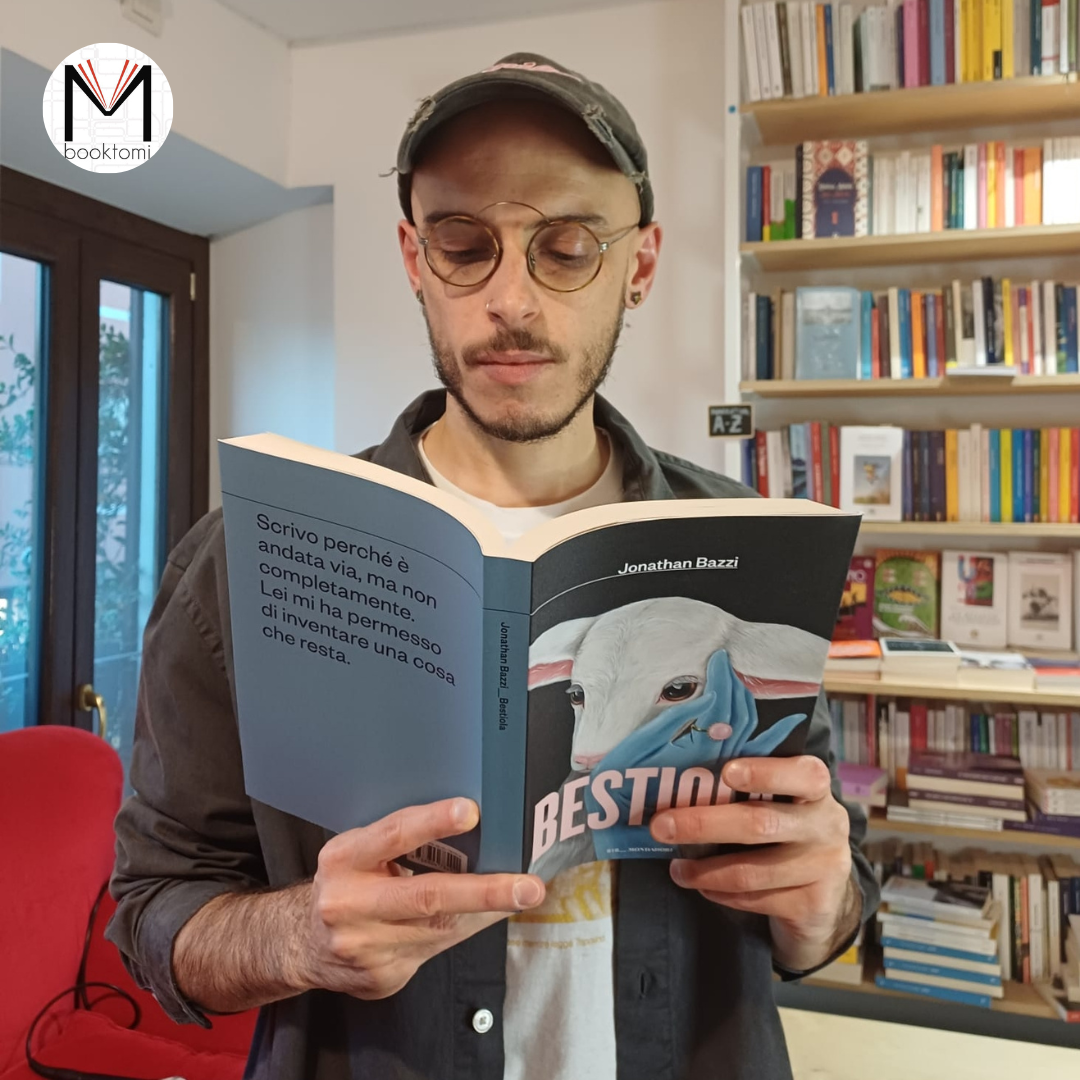
“I admit there is something inadequate in me, miss you: I am not capable of living.”
With this third book, Bazzi offers us a precious gift: a perspective capable of looking beyond the surface of things, of finding cracks where others see only walls, and of discerning poetry even in the most disheveled folds of existence. He is one of the few contemporary writers with the ability to bridge the gap between heart and mind.
The author begins his narrative from a place of absence: the death of Mirtilla—the cat with whom he shared sixteen years of his life—and the void she left behind, alongside Purè, the other cat who had been a constant presence in his daily life. This loss sparks a need to return to writing, to give shape to his grief, and to preserve—from total disappearance—all that love had built. It is a form of mourning that is often misunderstood, or even rejected, by today’s society; pausing to grieve the death of an animal with whom one has shared a significant part of one’s life is frequently dismissed as a sign of weakness.
The backdrop to Mirtilla’s passing is a rugged, unsentimental Milan—a city where private sorrow must contend with the ruthless, practical demands of everyday life. There are landlords who seem to forget that behind every contract lie real human beings; bank accounts that dwindle until there is barely room to breathe; mounting expenses incurred in the desperate attempt to save Mirtilla from her illness; and professional commitments that continue to demand time, energy, and words. For grief does not bring the world to a standstill: the bills keep arriving, money remains scarce, and deadlines show no regard for one’s mourning. And so, while desperately trying to save a beloved life, one must also find a way to go on living one’s own. It is within this friction—between the fragility of human affection and the harshness of material necessity—that Bazzi’s story takes on a broader dimension, revealing just how difficult it can be to afford the luxury of suffering when even daily survival is a struggle.
Yet, Bestiola is more than just a story about affection for animals; it is an attempt to carve out a place in the world when the world seems to have reserved no such place for us. We are fortunate to have read this book, but we are even luckier that the author managed to rediscover his voice and continue his work as a writer. It is a book to read, to give as a gift, or even to leave behind at a bus stop—so that a stranger might find it and read it, too.
_____________________________________________________________________________________________________
Jonathan Bazzi, Bestiola, Mondadori, Milano, 2026